• Supervision with Marcus
  • Fees & Questions
  • About Marcus
  • How To Find
    & Contact Me
  • 07973 322 819
  • Skip to primary navigation
  • Skip to main content
  • Skip to footer
  • Psychotherapy in West London
  • Therapy for Abuse Victims & Survivors
  • Work & Career Issues Therapy
  • Boarding School Survivors Therapy

Psychotherapy in West London

Psychotherapy & Counselling with Marcus Gottlieb

Cover Story Extracted from PINK PAPER 24 September 2004

As pupils get back to their studies, Simon Swift finds out why a former student has set up a group for gay boarding school survivors.

Boarding schools are as famous for their tales of gay sex as they are for their formidable academic reputation. But the belief that the posh kids are all enjoying wild sex-lives blinds people to the crippling emotional problems that pupils are often left with.

I remember before going to Eton in 1971, reading an ex-housemaster’s book about school life, which described homosexuality as ‘almost always a phase and nothing for parents to worry about’.

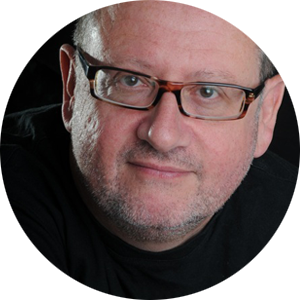
Marcus Gottlieb, a former boarder at Eton in the 70s, is now a psychologist. He offers support for gay boarding school “survivors” and claims that ex-students are still suffering from hiding their sexuality during their youth. “I remember before going to Eton in 1971, reading an ex-housemaster’s book about school life, which described homosexuality as ‘almost always a phase and nothing for parents to worry about’,” he says. “When I got there, my housemaster’s rumoured attitude was: ‘I don’t mind mutual masturbation but I draw the line at buggery’.”

In my schooldays the word ‘gay’ wasn’t used as an insult – instead the term ‘perv’ was used. That says it all really

“In my schooldays the word ‘gay’ wasn’t used as an insult – instead the term ‘perv’ was used. That says it all really” He adds becoming a completely different person is a way of life for some gay students. “[At boarding school] it’s so much more important to pass yourself off as ‘normal’ – as one of the boys or girls – and not to let anyone suspect your gayness. There’s really no outlet.”

Gottlieb is running one of the first series of workshops in London especially for gay men who have been ex-boarders.

Gottlieb is running one of the first series of workshops in London especially for gay men who have been ex-boarders.

He claims many have experienced difficulties when they leave for life outside the school walls. “There is an overriding lack of privacy at boarding school, an absence of personal space and boundaries that other children or teenagers take for granted. “You are always subject to intrusion. So you’re very alert to how others are behaving,” he says. “Your actual impulses, needs, desires, preferences about anything – what you eat, how you exercise your body, or how you express your sexuality – are experienced as a nuisance or simply irrelevant.”

Gottlieb claims that some of the gay ex-boarders he has dealt with have experienced debilitating problems such as clinical depression, eating disorders and alcoholism.

We all have strategies for surviving at boarding school, rigidly conforming, acting tough, evasiveness, humour.

Although some are often successful in their career, they discover relationships aren’t working and friendships are often superficial. He says many are in their 30s before they realise something is missing in their lives. “We all have strategies for surviving at boarding school, rigidly conforming, acting tough, evasiveness, humour,” he recalls.

“In my schooldays the word ‘gay’ wasn’t used as an insult – instead the term ‘perv’ was used. That says it all really. “My own experience was of bursting out [of the closet] pretty soon after leaving, but the guilt and oppression has left a deep scar.”

One ex-boarder said: “It’s like an extra suit of armour you have to wear in that, to an extent, you’ve already adapted your personality to fit and keeping a handle on your gay feelings is just another thing to worry about. “University is a different world but I still felt like I couldn’t come out still – which is a shame because that’s your opportunity to have fun.”

They [gay men] have difficulty with relationships because they have become closed people at boarding school…

Nick Duffel set up Boarding School Survivors in 1990 – a national organisation which helps troubled ex-boarders make sense of their experiences. His book, The Making of Them, illustrates the effects boarding can have on young people. The situation for gays and lesbians is especially complex. “They [gay men] have difficulty with relationships becausethey have become closed people at boarding school but this is also reinforced by the shame and secrecy, until very recently, that were a big feature of being gay,” he says.

Duffel has identified a condition called Strict Survival personality in some boarders, which involves staying out of trouble and being very guarded. “You suffer many of the things that people in prison suffer and yet it is a privilege,” he adds.

In his research Duffel has heard some horrific stories about anti-gay bullying in boarding schools. “Using gayness as a term of abuse is not just a boarding school phenomenon but there is an absolute fear of being thought of as gay in such an institution.”

Boarding schools have a real hot-house effect where pupils are sexually impatient and experiment with other boys and girls.

Boarding schools have a real hot-house effect where pupils are sexually impatient and experiment with other boys and girl “In fact if you get an attractive boy that turns the other boys on they can pay a heavy price and become stigmatised as gay for arousing such feelings in other pupils. When I was at school this did happen to another boy and he killed himself as a result because there is a tremendous amount of scapegoating, particularly around puberty. The culture is eventually one of denying, suppressing and sublimating into sports.” Even more confusing is the mythology that gay experimentation is a regular practice at boarding schools. Duffel says staff attitudes towards sex are often the problem. “These boarding schools are often single gender and have a real hot-house effect where pupils are sexually impatient and experiment with other boys and girls – and yet experimenting with your body is taboo in the eyes of staff.”

Gottlieb agrees: “It depends on what school you go to. What’s acceptable varies but in most cases whatever goes on is pretty much behind closed doors.” Most feel they are doing something wrong and, if anyone finds out about it, they will be outcasts.

“The fact is that when I was at school expulsions did happen and if you were caught having any sort of sex you were liable to be expelled.” There’s no easy solution and gay organisation School’s Out admit that boarding school is not an area they deal with at all. Gottlieb says that there are forward thinking institutions but unsurprisingly they are not in this country.

For gay students it is going to be very important for them to see gay faculty members able to live a normal life.

“Nowadays some of the leading American private schools, such as Andover and Concord, permit gay faculty house parents to live together so that pupils have a role model of a normal, loving adult gay relationship,” he says. “For gay students it is going to be very important for them to see gay faculty members able to live a normal life. The presence of gay couples with solid relationships supports those who are at a vulnerable period in life.”

The image of boarding school in books such as Tom Brown’s Schooldays, Mallory Towers and even in the five Harry Potter books is one of intense camaraderie and freedom to grow up. The reality for some remains surprisingly different. Gottlieb explains: “A writer I was at school with said ‘boarding schools are in the country.

So after a while you just get out of the habit of loving – getting back into the habit can be a very difficult task

You can play football and cricket and make huts in the woods. But what you cannot do is love. You cannot love your parents because it hurts so much – and you cannot love your fellow pupils because there is an overriding taboo against any hint of homosexuality. So after a while you just get out of the habit of loving – getting back into the habit can be a very difficult task’. “I just find the problems are multiplied if you are gay, because the taboo against gayness is usually so very strong, and what you have to hide or deny yourself is so much more.”
Footer

Psychotherapy & Counselling in West London

  • Psychotherapy in West London
  • Therapy for Abuse Victims & Survivors
  • Work & Career Issues Therapy
  • Boarding School Survivors Therapy

Professional Registration & Accreditation

Marcus Gottlieb BACP Professional Psychotherapy Registration

Practical Information

  • Full List Of Site Pages
  • Terms and Conditions
  • Privacy Policy
  • Your Questions & My Answers
  • Practice Location & Contacting Me

© 2025 Marcus Gottlieb ·

· Notting Hill Therapy ·
· 67 Tabor Road, Hammersmith, London, W6 0BN ·
· Phone: 07973 322 819
£95 - £140
·
· Site Map · Site Build & SEO Webtime ·

MENU
  • Home
  • Psychotherapy in West London
    • Abuse & Trauma
    • Addictions & Obsessive Behaviour
    • Anger & Anger Issues
    • Anxiety & Panic Attacks
    • Behaviour Change
    • Bereavement, Grief & Loss
    • Body Image Issues & Body Hatred
    • Bullying & Harassment
    • CBT West London
    • Couples Counselling
    • Depression & Mood Swings
    • Eating Disorders & Intuitive Eating
    • Family Issues & Challenges of Parenting
    • Gay Couples Therapy
    • Groups & Workshops
    • Low Self Confidence & Low self Esteem
    • LGBTQ & Sexual Orientation
    • Midlife Crisis, Ageing & Life Transitions
    • Pesso Boyden Therapy
    • Psychosomatic Symptoms – IBS, ME, Eczema, Migraine
    • Relationship Counselling
    • Sexual Difficulties, Obsessions & Addictions
    • Sleep Disorders, Insomnia and Relaxation
    • Social Anxiety & Other Phobias or Fears
    • Stress, Overwhelm & Burnout
    • Work & Career Issues
  • Abuse & Trauma Therapy
    • Therapy for Adult Victims of Childhood Abuse
    • Male victims of domestic violence
    • Therapy for Abusive Relationships
    • Boarding School Survivors Therapy
  • Boarding School Survivors Therapy
    • Boarding School Survivors & Relationship Issues
    • Boarding School Survivors & Bullying
    • Boarding School Survivors & Depression
    • Boarding School Survivors Workshops in London
  • Work & Career Issues Therapy
    • Assertiveness Skills Coaching
    • Bias, Prejudice & Discrimination
    • Bullying & Harassment at Work
    • Career Transition Coaching
    • Work & Life Balance Counselling
  • Supervision for Psychotherapists
  • FAQ
  • About Marcus
  • Contact
  • London Therapy & Counselling
Pesso Boyden Group with accredited practitioners Deborah Clarke and Marcus Gottlieb

Pesso Boyden Group with accredited PBSP practitioners Deborah Clarke and Marcus Gottlieb

Pesso Boyden Therapy (‘PBSP’) is a philosophical process for becoming whole.

It is a respectful, interactive group process that heals by embedding new memories in the brain and in the body

Most people consciously or unconsciously have memories – explicit or implicit – of 

1. deficits 

2. traumas 

3. having to take care of others when we were too young – e.g. protecting a sibling, providing the joy in the life of an unhappy parent, unconsciously becoming the ‘spouse’ of a widowed parent, or making the world right after hearing stories of injustice. 

When any of these three categories of memory appear in the client’s work, the client and therapist work together to externalise them, in order to illuminate the client’s ways of handling life and to facilitate change. The client is always in charge of this process – people and incidents from the client’s past will be symbolised in the here-and-now either by people in the group or by objects in the room, all chosen and placed by the client. 

The therapist then works with the client to facilitate an antidote to what happened in the past – a new memory which provides what the client needed at that particular time in their past, from a specific kinship figure. This new memory may be developed over several sessions in a number of steps. In the Pesso approach we don’t change our history; however, we do change our response to our history, leading to a new perspective. 

The way is opened to possibilities of greater pleasure, satisfaction, meaning, integration and connectedness.


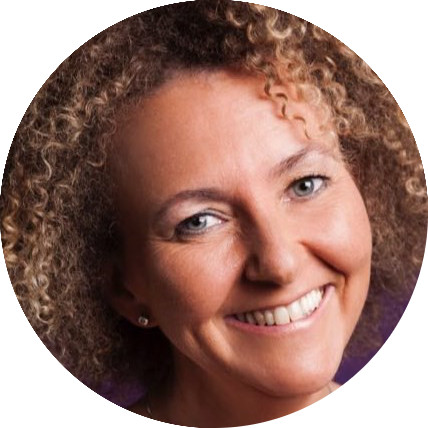
Deborah has worked as a Performance Coach for over 16 years having trained with Coach U. Her background is in the arts as an actor, theatre director and artistic director. She has worked with a wide range of people from all walks of life. Having first encountered Pesso Boyden as a client, she felt inspired to do the training herself. Since graduating in 2013 she has been running Personal Development workshops using the Pesso Boyden system and is now accredited by the official PBSP U.K. organisation.

Notting Hill Therapist | Marcus Gottlieb Psychotherapist & Counsellor
Marcus Gottlieb is a highly experienced London-based psychotherapist with a particular interest in boarding school survivor syndrome. Having trained alongside Deborah directly under Al Pesso and his closest collaborator Lowijs van Perquin, he is steeped in the work of PBSP and a strong believer in the client’s genetic impulse towards health and expression of their unique potential and individual destiny. He became an accredited Pesso Boyden therapist in 2021.
Pesso Boyden Workshop with Ana María Ruiz Sancho and Marcus Gottlieb


Pesso Boyden Therapy is a respectful and highly respected, body-based psychotherapy with distinctive techniques aimed at addressing entrenched issues. It is an interactive process that creates new body-based memories to heal emotional deficits of the past.

An exceptionally powerful personal development tool, it uses feedback, systematic procedures, objects and role players in a unique methodology, in order to repair the early traumas, wounds and losses that can powerfully influence the brain’s map of the world.

In shifting underlying perspectives, the way is opened to the possibility of greater pleasure, satisfaction, meaning and connectedness, and an enhanced freedom to effect longed-for changes.

It is expected there will be between 8 and 12 participants, with an absolute maximum of 15. The day will start with an explanation of Pesso Boyden and an experiential introduction, followed by 4 actual client sessions of an hour each.

Venue: Philadelphia Association, 4 Marty’s Yard, London NW3 1QW
Date: Saturday 3 June 2017
Time: 0930 to 1800
Cost: £75

Register Your Interest


Ana María Ruiz Sancho is an experienced psychiatrist and a psychotherapist. She is also a specialist in group dynamics and an Institutional and Team Motivation Consultant.

Ana is the Founder and a Director of VocAcción, as well as being a qualified Pesso Boyden psychotherapist.


Notting Hill Therapist | Marcus Gottlieb Psychotherapist & Counsellor

Marcus Gottlieb works with relationships, sexuality, abuse and trauma, with a particular interest in boarding school survivor syndrome. Qualified in Pesso Boyden as well as other psychotherapies, he is also an Alexander Technique teacher.

An Introduction to the Pesso Boyden Method


An opportunity to learn about and observe the distinctive techniques of this respectful body-based psychotherapy.

Suitable for both psychologically interested professionals, people seeking personal development/CPD and for people not in the therapeutic professions seeking to address entrenched issues. For all those who are interested in living a larger life. A special price of £35 for the day includes lunch and refreshments. CPD certificates will be available.

PBSP (Pesso-Boyden System Psychomotor) is a powerful, deeply respectful, psychotherapeutic process that uses feedback, ritual, objects and role players in a unique manner to heal the traumas, wounds and losses that affect our personal map of the world.

Its central goal is the imaginative creation of an ‘ideal’ healthy past that a person’s brain processes so that they emerge feeling differently about themselves. As Albert Pesso said, ‘Humanity is responsible for the meaning that surrounds us. The task for each person is to create a meaningful life and then live it with existential courage and passion.’

As well as gaining new perspectives, clients often experience increased pleasure, satisfaction, meaning and connectedness following a PBSP session and find themselves psychologically freer to make the changes they wish for in their lives.
Date: Saturday 7 October 2017
Venue: Notting Hill, London W11
Time: 10.00 am – 4.30 pm
Cost: £35 (inc lunch & refreshments)


Register Your Interest


Boarding School Survivor Syndrome Conference

BOARDING SCHOOL: Surviving the Syndrome
Broken Attachment and Childhood Trauma

University of Brighton

Saturday 9 September 2017
9.30 am to 5.00 pm

Conference for psychotherapists, counsellors, mental health workers, boarding school survivors and other interested people.

Conference overall aims are to:
§ Present key aspects of what has been published about the psychological and other effects of boarding.
§ Explore helpful therapeutic approaches for clients who are former boarders.
§ Consider current research and a possible agenda for future research
§ Enable networking amongst those interested in this important topic

Chair: Pam Howard, School of Applied Social Science, University of Brighton.

Speakers: Nick Duffell, Joy Schaverien, Alex Renton, Thurstine Basset, Anni Townend, Olya Khaleelee.

Group Discussion Facilitators: Marcus Gottlieb, Leslie Lund, Nicola Miller, Simon Partridge, Boarding Concern Directors.

For more details, contact Laura Williams:
southcoastevents@brighton.ac.uk

Contact Marcus

Hello and thanks for making contact.

Either fill out the form below or you can call me or email me.